


More Than a School: My 2nd Year at Wat Suthiwararam
Royal connections, Buddhist tradition, and more than a century of history in the heart of Bangkok.
When I first walked through the gates of Wat Suthiwararam, I had barely met my new colleagues or figured out where my classroom was before the school seemed to announce that this was going to be a very different kind of teaching experience.
My first day began with live music, student flag demonstrations, traditional Thai instruments, and a monk blessing the school as students and teachers prepared offerings. I remember taking it all in with the slightly bewildered excitement of a first-year foreign teacher, wondering exactly what I had signed myself up for.
And then there was the school itself.
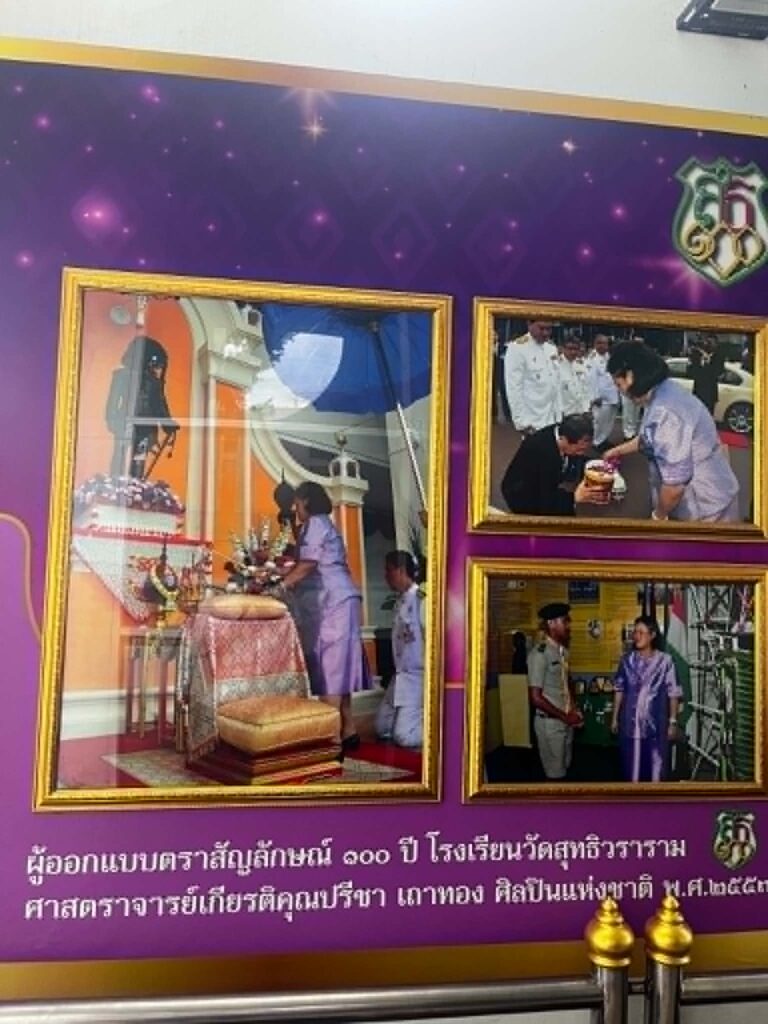
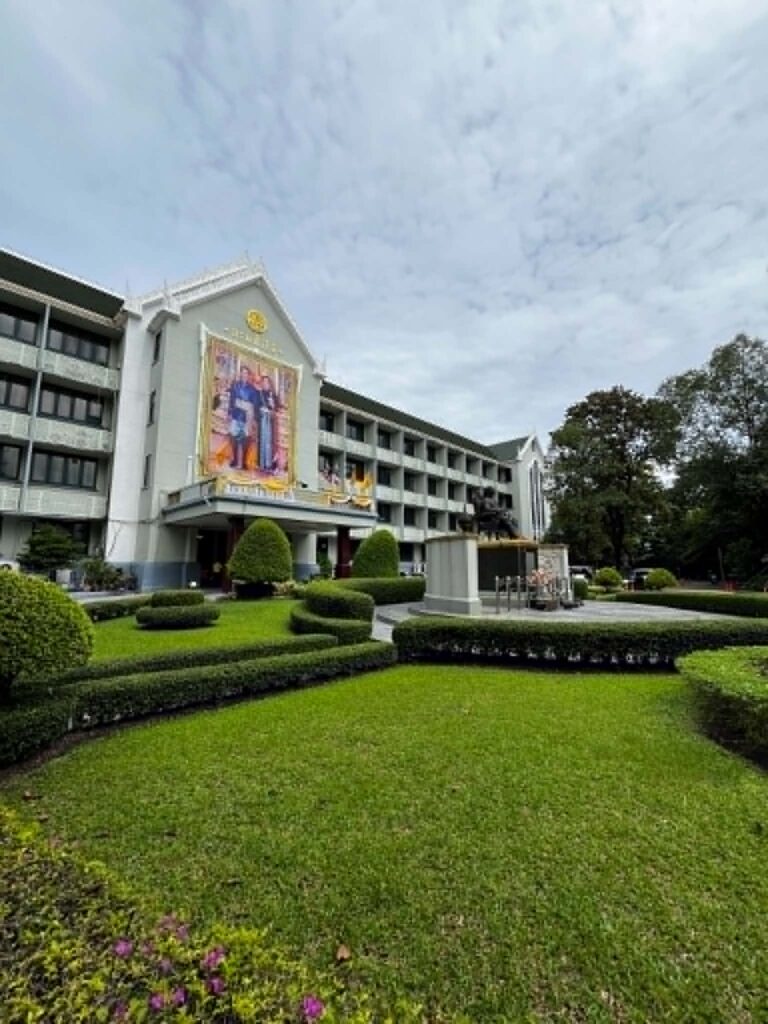
The first things you encounter are large statues and busts honoring King Chulalongkorn (Rama V) and his son, King Vajiravudh (Rama VI), alongside the school’s shrine. Portraits of the two kings appear throughout the campus, while the main promenade is lined with photographs of Princess Maha Chakri Sirindhorn visiting the school over the years.
I had come to teach English. I hadn’t yet realized how lucky I was that I was also walking into more than a century of Thai history.
Royal Roots
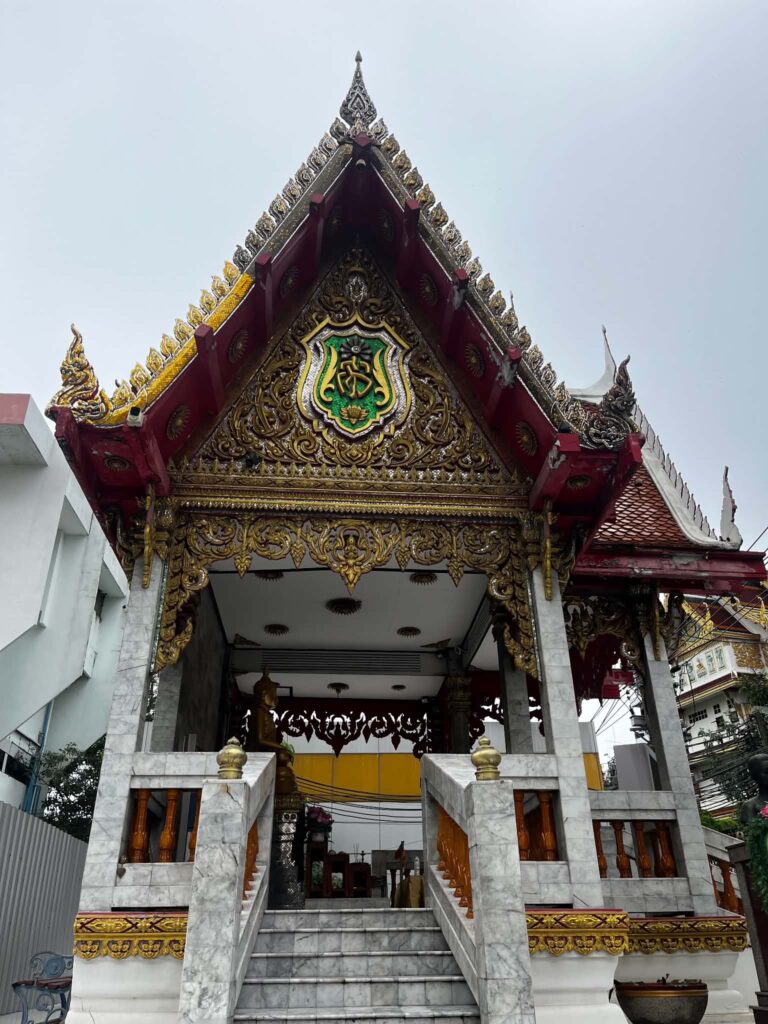
I came to learn in my 2nd year, that despite having the emblem of King Rama X on our building and many nods to royal roots, Wat Suthiwararam is not formally a Royal Patronage School.
What it does have is something I find equally interesting: a history deeply intertwined with Thailand’s monarchy, Buddhist institutions, public education, and the families who helped build the school itself.
The temple across the street came first. After falling into disrepair, it was restored through the efforts of Than Phuying Sutthi and her family, eventually becoming Wat Suthiwararam. Her daughter, Than Pan Upakarnkosakorn, would later become central to the school’s story.
When Than Pan died in 1911, her children helped establish a school as a memorial to her, using land associated with the family. The school was then incorporated into the public education system, and King Rama VI praised the donation and establishment of Wat Suthiwararam as an exemplary act of merit. The school was officially established on July 3, 1911.
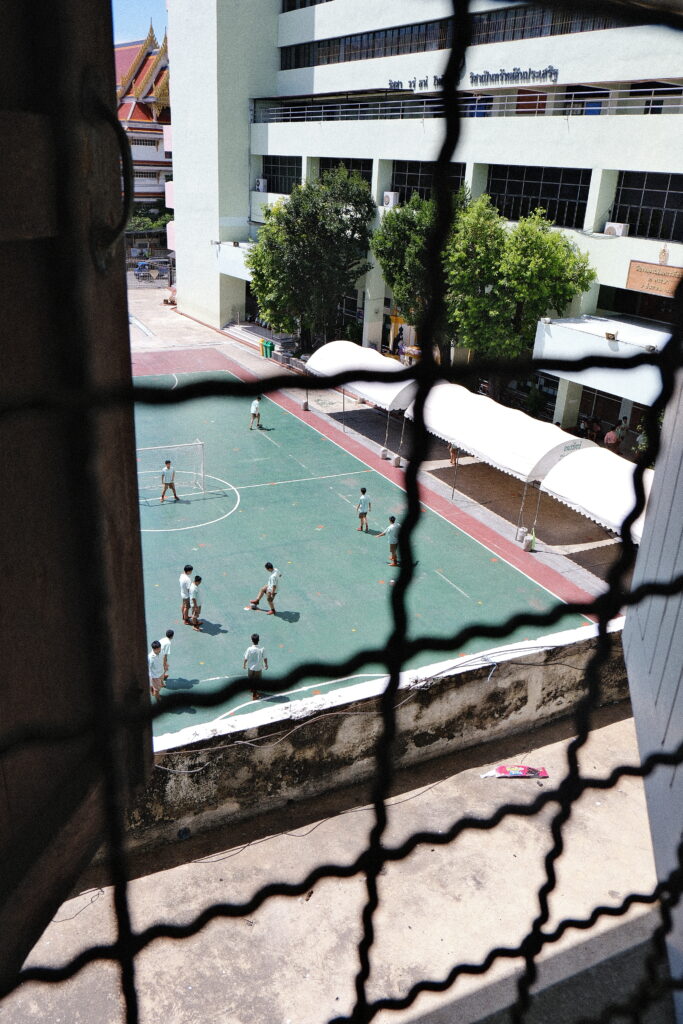
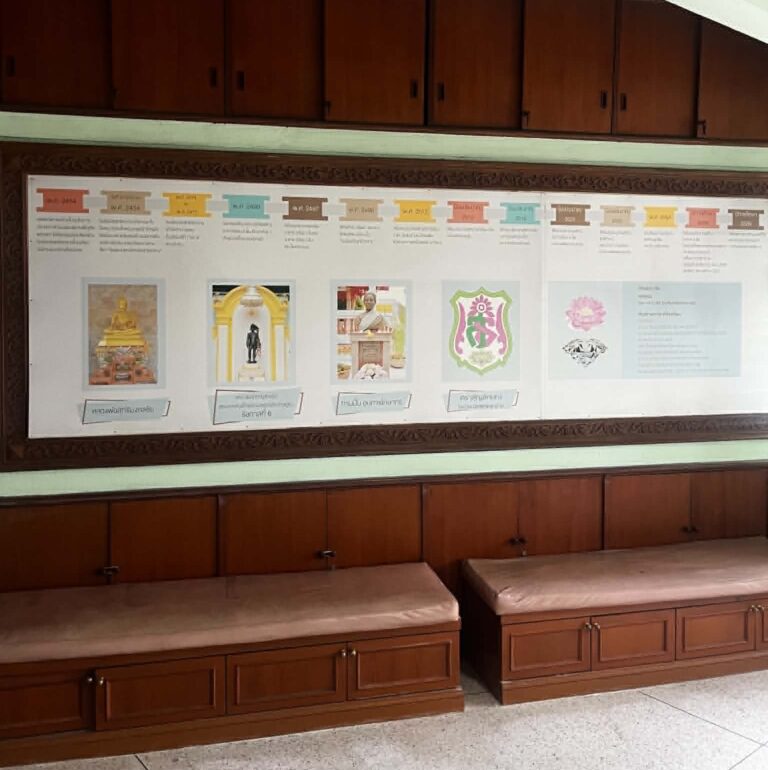
One of my favorite recent discoveries was a historical timeline I found inside the school. Even after spending a year here, I was still discovering pieces of the story of the institution I walk through every day.
The school has survived wars, fires, rebuilding, expansion, changing generations, and more than a century of Bangkok’s transformation.
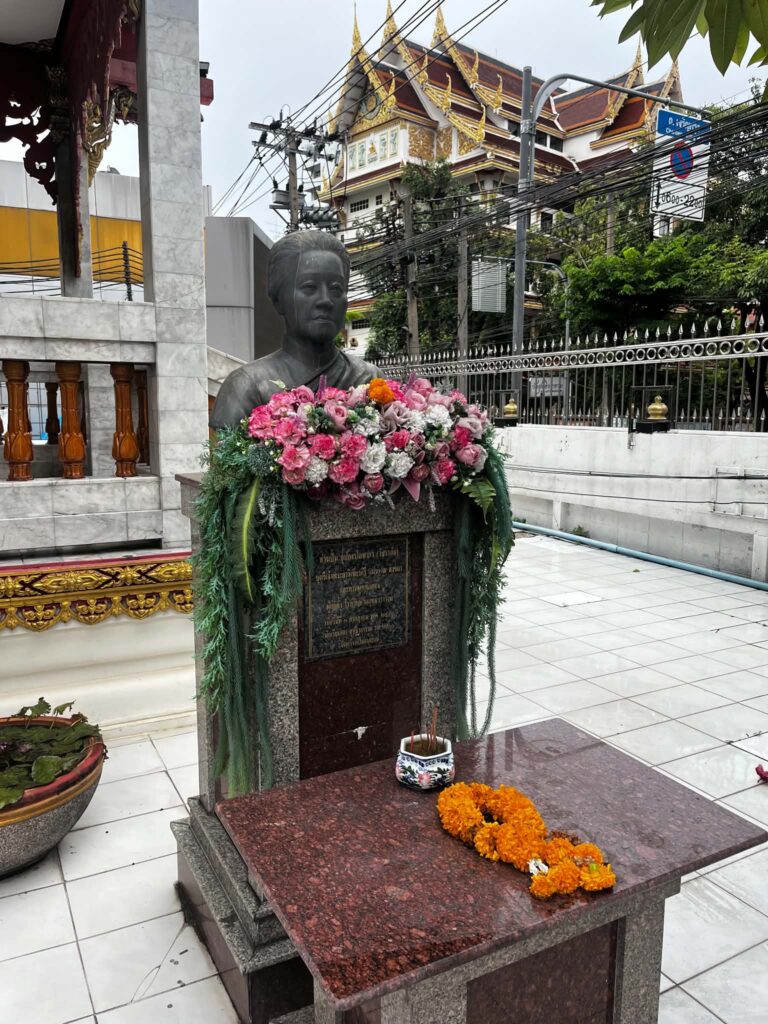
And the school remembers the people who made that possible, too. Alumni even commissioned a statue honoring Than Pan for the school’s 80th anniversary.
Meanwhile, the royal connection continued into the modern era, including visits and projects associated with Princess Maha Chakri Sirindhorn – the current King’s sister, and the same Princess that appears in family photos with my partner’s family.
A School Year Measured in History
At Wat Suthiwararam, history isn’t confined to the walls. It becomes part of the school calendar.
Every October 23, the school observes King Chulalongkorn Day (Wan Piyamaharaj), commemorating Rama V. And every July, the school celebrates its own anniversary.
During my time at Wat Suthi, I’ve watched the school celebrate its 114th anniversary and then its 115th. The school officially identifies July 3 as both its founding and anniversary date.
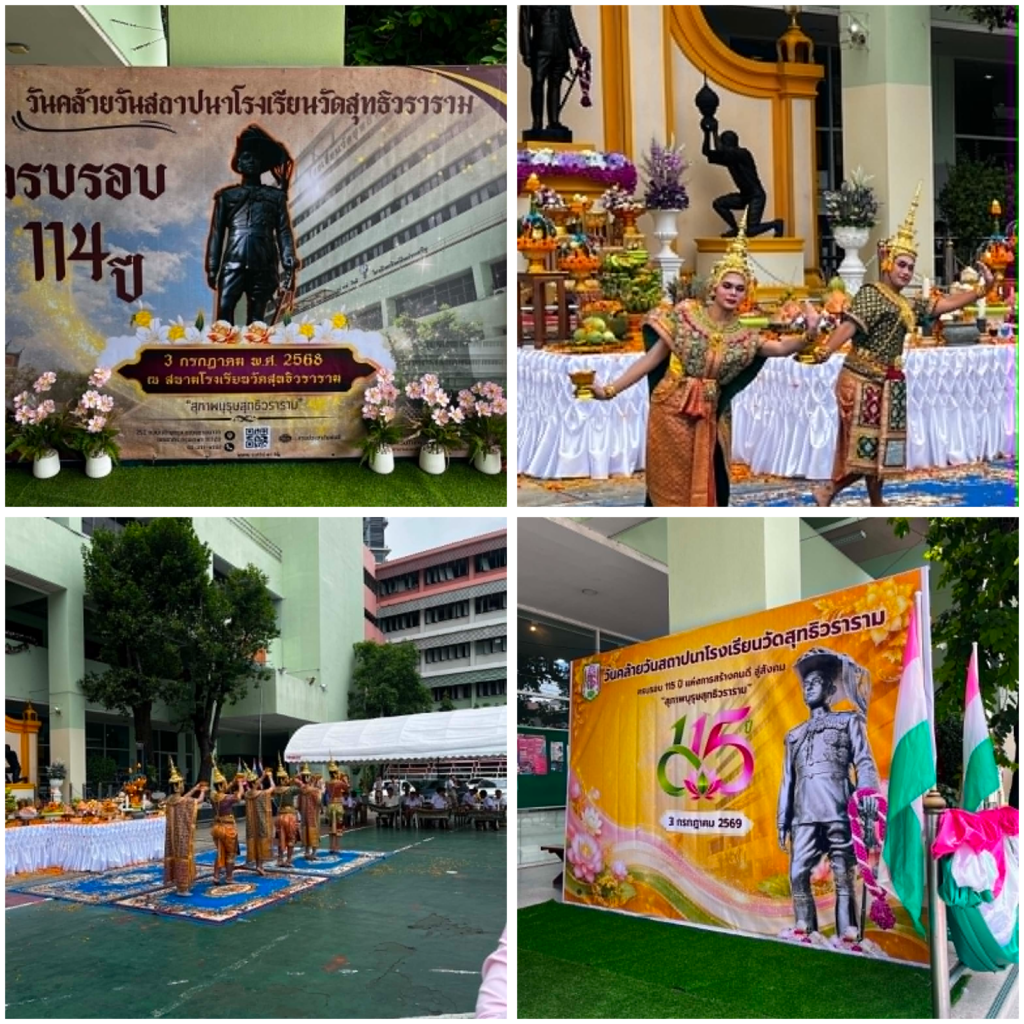
For a school more than a century old, an anniversary feels a little different. You’re not simply celebrating another year; you’re joining a tradition that has already outlived generations of teachers and students.
It’s a day full of food, performance, and school spirit as both current students and alumni come to observe the festivities honoring the school’s rich history. And sometimes, that history takes us well beyond the school gates.
When the Classroom Leaves Campus
Once each term, SINE teachers here at Wat Suthi typically accompany students on school field trips, including visits to institutions connected to Thailand’s royal development projects.
We visited the Royal Forest Department Museum, learning about Thailand’s environment, forests, and conservation efforts.
We also traveled to Chanthaburi to visit the Kung Krabaen Royal Development Study Centre, where students toured fisheries and mangrove forests and learned about environmental conservation and local communities.
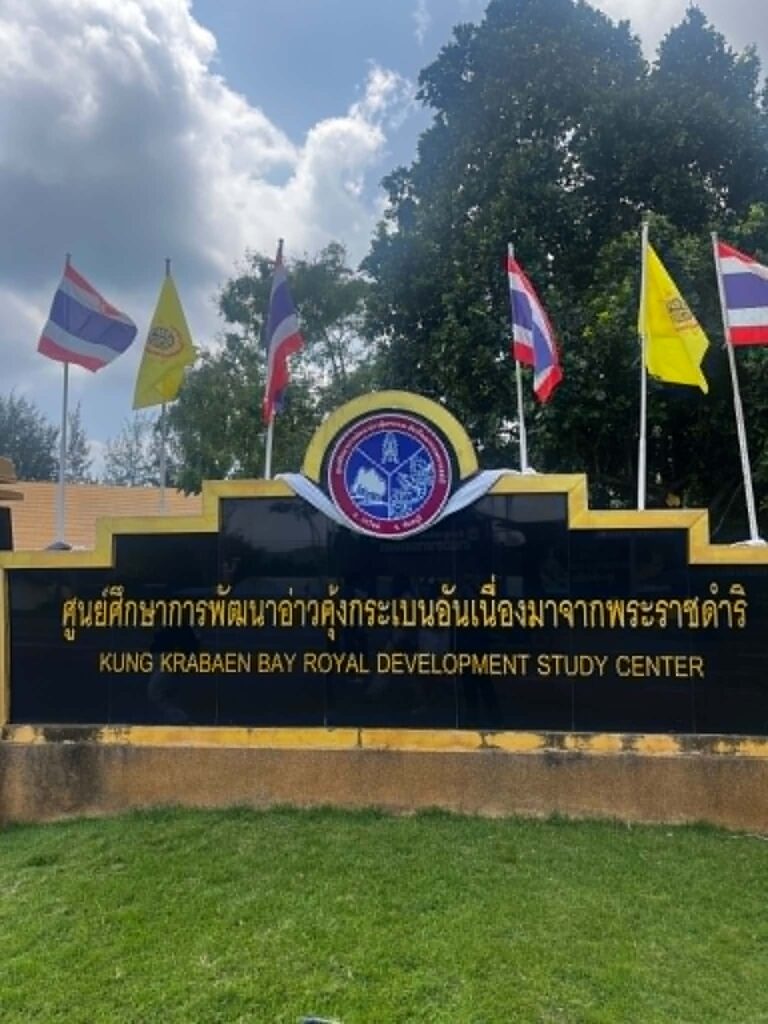
These experiences have been particularly interesting to me as a foreign teacher. The royal connection isn’t just something students see in portraits or hear about in ceremonies. It’s ever present and tangible in the places they physically go to learn … I suppose that is what’s most fascinating to me as an American ex-pat, especially one who’s having serious reservations about his own government.
And for me, that’s one of the unexpected privileges of teaching here: getting to experience parts of Thailand’s educational and cultural landscape that I certainly wouldn’t have encountered on my own.
It was so fun to watch the kids learn more about their local environment on both of our field trips during my first year. For a generation that is seemingly addicted to their phones, in a hands-on way outside of the classroom: traversing through mangrove forests, climbing trees with the forest department, looking at wildlife, and even visiting the aquarium.
Written by Teacher Colin