

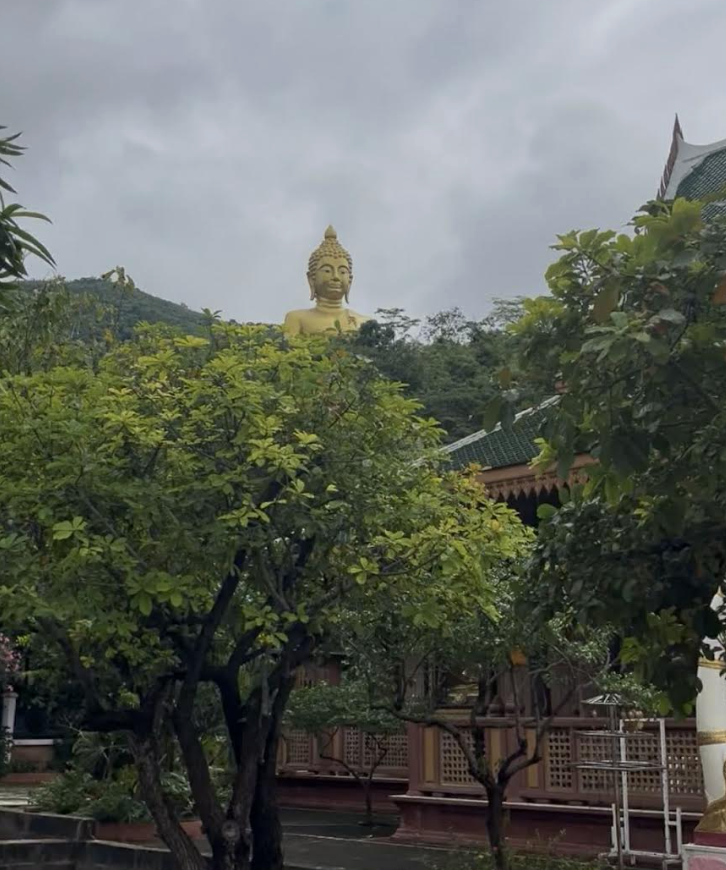
Lopburi + Wat Khao Wong Phrachan
Teaching in Bangkok has quietly reshaped my weekends. Many SINE teachers spend their Saturdays catching up on sleep, lesson planning at a café, or hopping a quick flight. And I’ve done my fair share of that too. But my experience here bends a little differently. Because my partner is Thai, my time outside the classroom is woven into something deeper than tourism — into family birthdays, merit-making ceremonies, temple visits, and long drives with aunties and uncles to family gatherings. These weekends are more than just escapes from the city; they’re invitations into the rhythms of family life that most expats only get to glimpse at from the outside.
The road north out of Bangkok always feels like a deep exhale. Especially at 5am in a sprinter van with your extended family. And while waking up at 5am on a Saturday morning is probably the last thing I want to do after a full week of teaching, moments like these with our Thai family are so priceless. But as the sprinter van reached top speed on the highway northbound, the city’s edges gave way to open stretches of fields and we packed into the car for a family celebration that would take us to Lopburi — specifically, to the steps of Wat Khao Wong Phrachan. I’d heard stories about its climb, its views, its quiet magic, but this was my first time making the pilgrimage. The day felt charged from the start: equal parts road-trip giddiness and something deeper, like the sense that we were heading toward a place where the mundane cracks open a little.
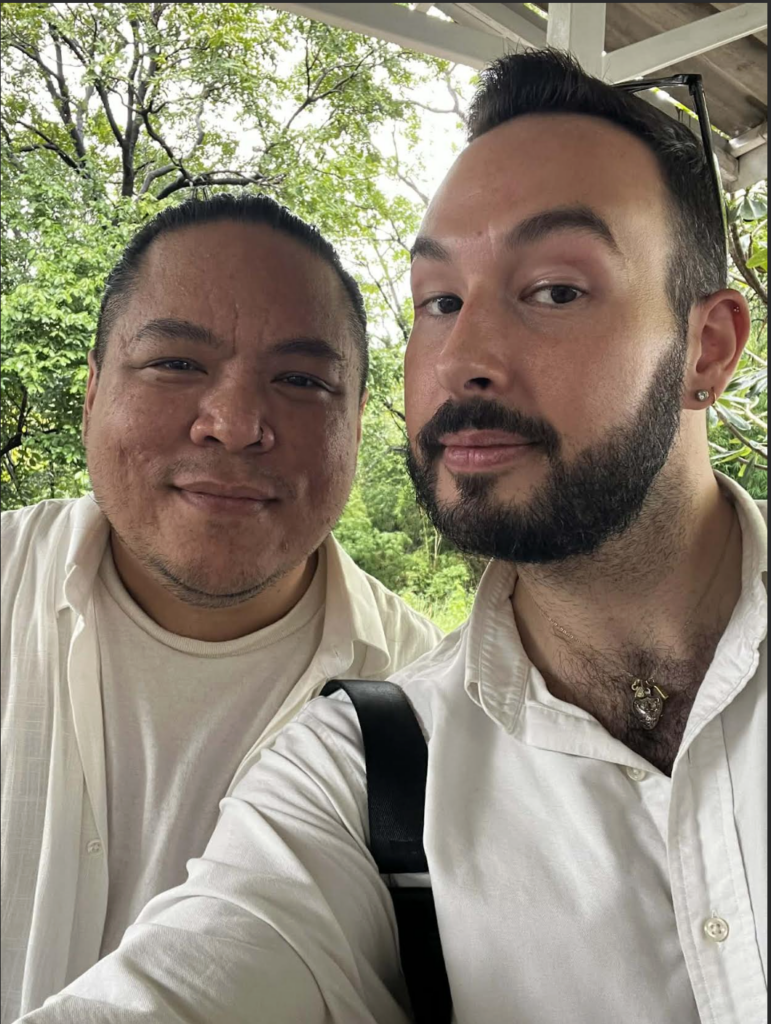
Wat Khao Wong Phrachan rises from the tallest peak in Lop Buri Province — a mountain locals know as Khao Wong Phrachan, sometimes called “Khao Wong Moon” or “Moon Hill.” The name itself, “เขาวงพระจันทร์,” translates to something like Moon-Encircled Hill, and once you’re there, it makes sense. No matter where you stand, the surrounding slopes wrap around the mountain in a soft ring, as if the landscape is holding the peak in a quiet embrace.
The site’s story stretches deep into local folklore. According to temple tradition, this mountain appears in the Ramakien, where a giant named Thao Kokkhanak is struck by an arrow from Rama and sent hurtling across oceans before landing here. His daughter, Nang Prachan, follows him and tends to him in a cave at the summit. Over time, this mythic tale became woven into the mountain’s spiritual identity.
More recently in 1953 (พ.ศ. 2496), monk Luang Pho Opasi climbed the mountain. Seeing that natural ring formed by the surrounding hills, he formally gave it the name “Khao Wong Phrachan,” anchoring the poetic meaning to the geography itself.
Religiously, the mountain holds even more weight because at the very top lies what devotees believe to be the sacred 4th Footprint of the Buddha (รอยพระพุทธบาทที่ 4). That alone makes the climb significant for Thai Buddhists — a pilgrimage tied not only to faith, but to the physical act of ascending the mountain.
Down below, the temple grounds include a beautiful three-storey teakwood museum created by the former abbot, Luang Pu Fak. Inside are relics, ancient images of Buddha, old artifacts, and amulets.
Wat Khao Wong Phrachan isn’t just a temple on a hill. It’s mythology, memory, pilgrimage, community craft, and a mountain that locals have been naming, climbing, and honoring for generations – especially to my partner Anthony and his family.
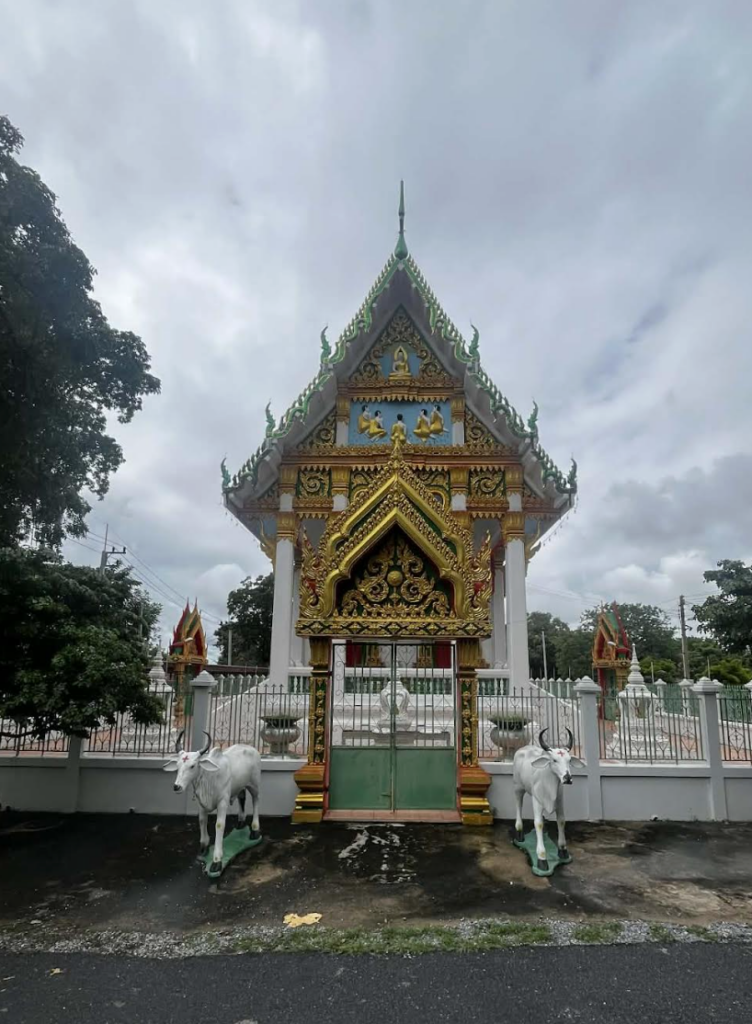
The Ransibrahmanakul (รังษีพราหมนกุล) family have been patrons of this temple since its inception, donating annually to the construction, expansion, and upkeep of the temple and its grounds. Just beyond the main temple, built into the cliffside, is a smaller shrine that overlooks the complex – this is where we spent the majority of our time, making merit and observing Theravada buddhist ceremonies with family honoring those that have passed at the mausoleum.
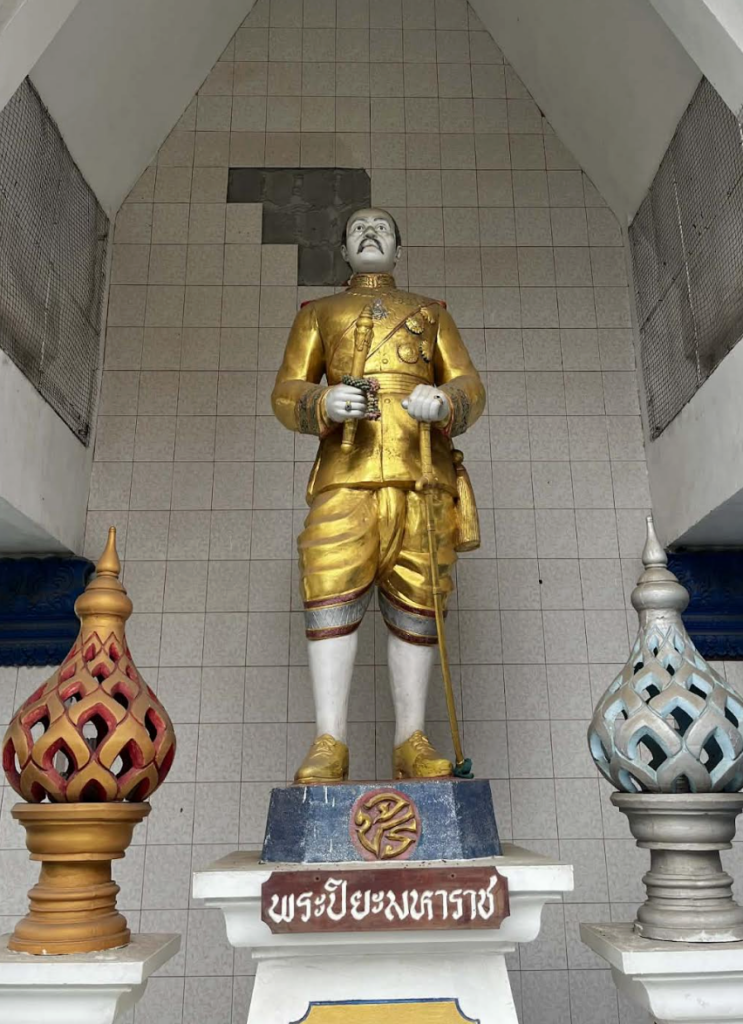
Notably, there is also a large statue of King Vajiravudh (King Rama VI) at the temple complex at the very top of the site – the same king who is responsible for finishing construction of my school, Wat Suthiwararam School! In 1913–1916, King Vajiravudh introduced formal surnames for the whole country – not just as legal identifiers, but marks of royal favor. Seeing as this king was the one who gifted the royal surname to the family for their involvement in religious/ritual service connected to the monarchy, it makes sense that he is honored here at the family temple.
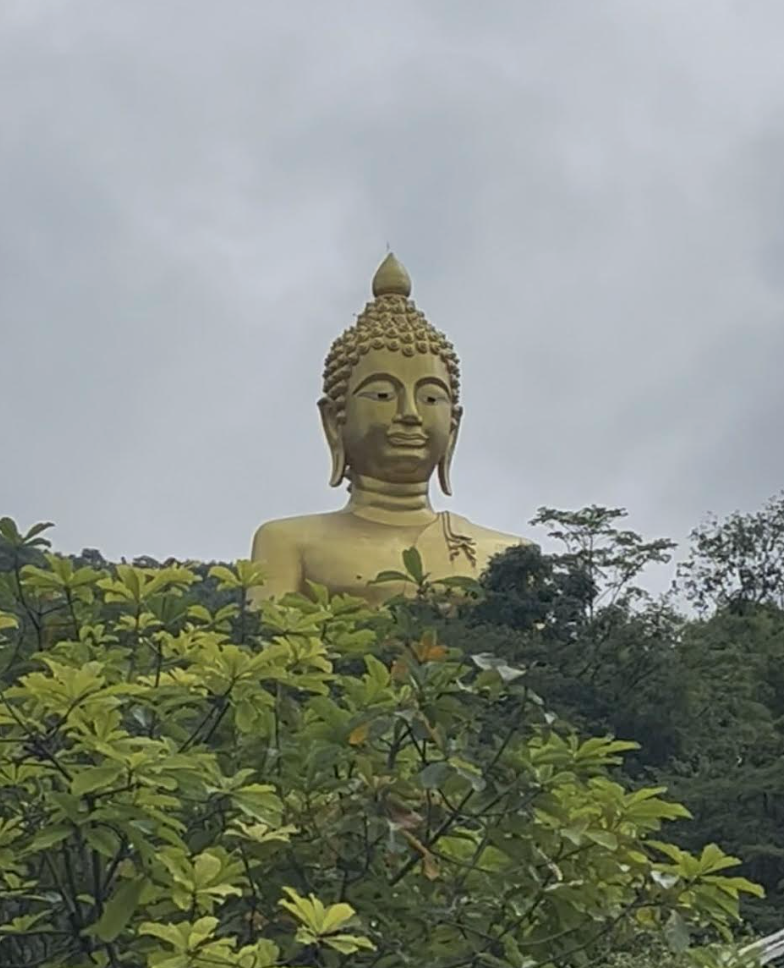
As the afternoon light softened over Lopburi and the ceremonies came to a close, I found myself looking out across the hills, thinking about how layered this experience really was. I came to Thailand to teach English. To build lesson plans. To manage classrooms. But standing there, surrounded by Anthony’s family, watching generations honor a mountain that has held their stories for decades, I realized that my education here runs parallel to my students’.
In the classroom at Wat Suthiwararam School, I teach grammar and pronunciation. On weekends like this, I learn about lineage, patronage, mythology, and the quiet architecture of Thai family life. I learn what it means for a temple to be more than a destination — for it to be an inheritance.
The climb up Wat Khao Wong Phrachan is steep, yes. But the real ascent feels more internal. Each trip north pulls me a little further into understanding — of this country, of my partner’s history, of the ways faith and family braid themselves together over generations.
Teaching in Bangkok has reshaped my weekends. But more than that, it has reshaped me. And sometimes, it begins at 5am, in a sprinter van, heading toward an auspicious mountain that holds so much more than just a view.
–
Thank you to Teacher Colin at Wat Suthiwararam School, Bangkok